Flip Physics


Flip Physics is a rigorous test of precision and 3D spatial awareness! Here, you manually execute perfect flips rather than relying on an automated button press. Your mission in this physics-based gymnastics simulator is to control your character as they perform flawless swings and jumps!
How to play Flip Physics
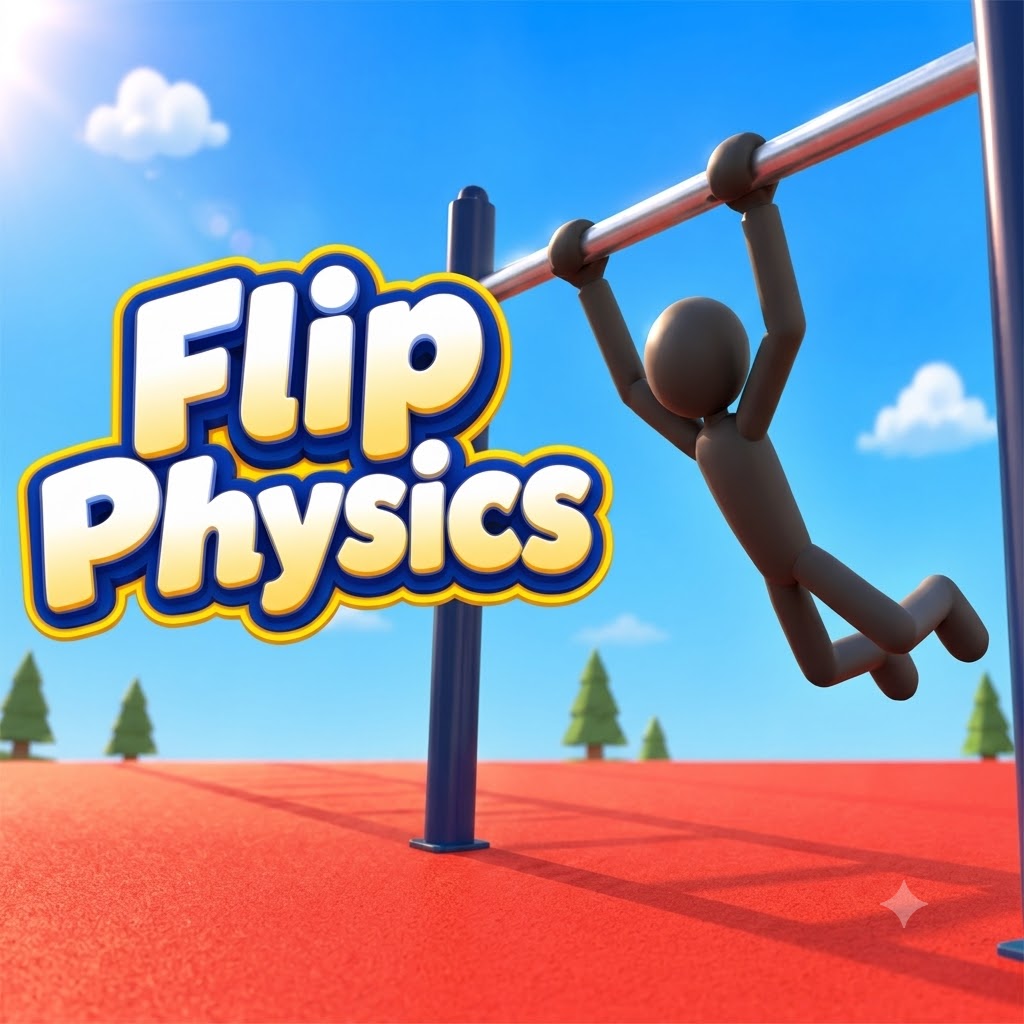
All movements in the game are based on real-world physics and momentum concepts. Tucking your body speeds up the spin, stretching it slows it down. For a good jump, you need to synchronise three critical phases seamlessly:
Building Momentum: Bend your character’s body to determine the rotation angle and build up momentum before launching into the air.
Tuck to Spin: Tuck into a ball as soon as you leave the ground to increase your spin. The key skill here is timing the release -- hold the tuck too long and you'll over-rotate.
Extending to the Land: When you see the floor with your toes pointed down, extend your body to slow the rotation and stabilise your center of gravity for the landing.
Controls
Left Arrow: Bend the body to build momentum.
Hold Spacebar: Tuck the body to increase flip speed.
Up Arrow: Extend the body to slow rotation and prepare for landing.
R Key: Respawn or restart immediately if you wipe out.
Mastering Every Jump
Get a feel for the game's rhythm with simple flips before challenging yourself with more complex acrobatic sequences.
Initiating the tuck (rolling motion) too early or too late will completely ruin your character's flight trajectory.
The key to a successful landing is to release the tuck position once the character has completed about three-quarters of the rotation. This leaves enough time to extend your body and legs for the landing.
If you keep falling, change only one variable on your next attempt to pinpoint exactly where the error lies.
Other physics-based sports games: Soccer Physics.













Discuss Flip Physics